
Description
What Happened After the Civil War Ended?
The Civil War may have ended in 1865, but the country still faced an enormous question:
How do you rebuild a nation after years of war—and what happens to millions of formerly enslaved people now that slavery has ended?
That is where Reconstruction begins.
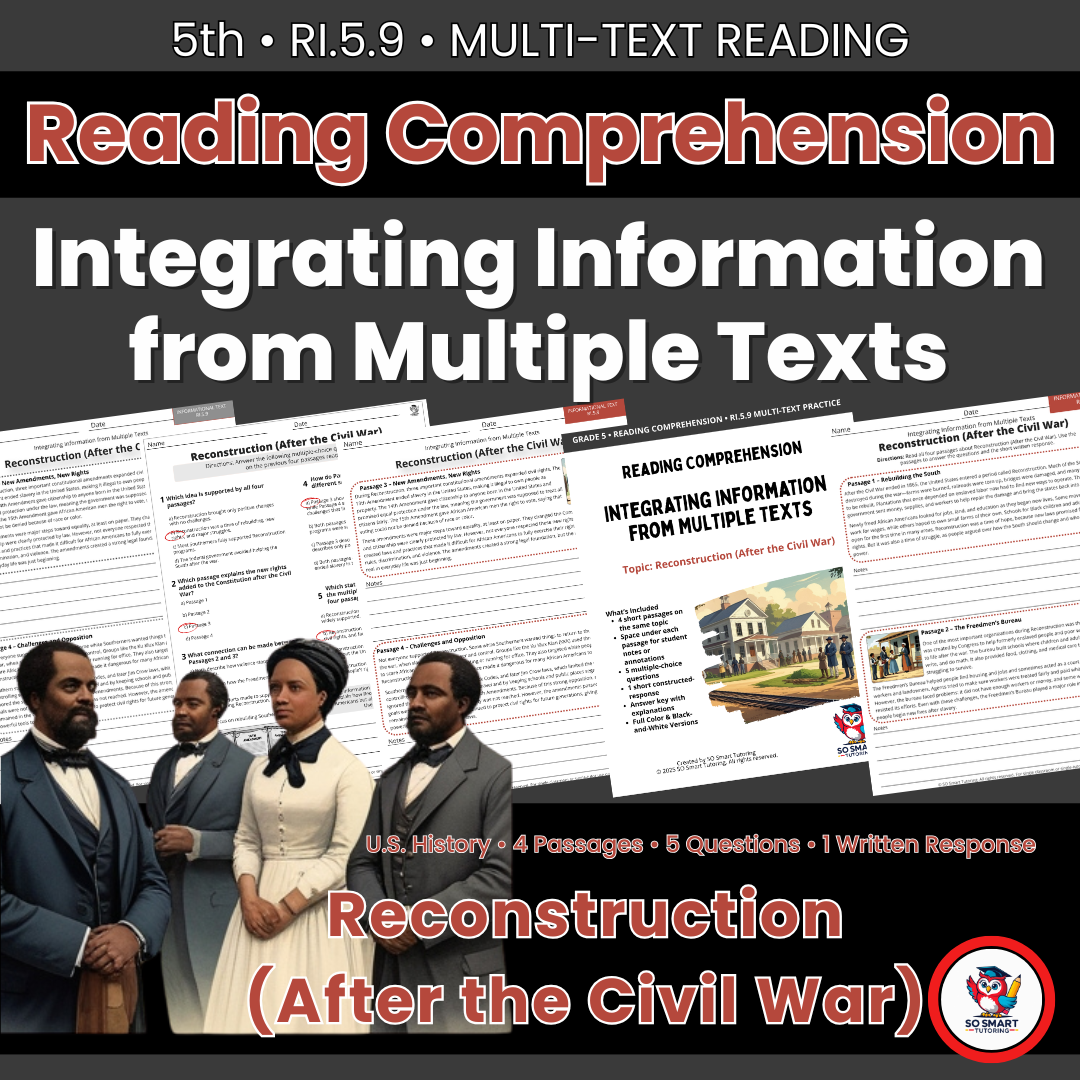
Reconstruction After the Civil War: Reading Comprehension & U.S. History Lesson gives students an age-appropriate introduction to one of the most important and complex periods in American history while strengthening essential reading and thinking skills.
Instead of simply memorizing names, dates, and amendments, students read to understand why Reconstruction happened, what changed, what challenges remained, and why this period still matters today.
Students Will Practice
- Reading comprehension
- Identifying main ideas and supporting details
- Understanding historical vocabulary
- Making inferences
- Cause-and-effect relationships
- Sequencing historical events
- Summarizing informational text
- Using text evidence
- Comparing ideas and experiences
- Critical thinking
- Written responses
What Students Will Learn
Students explore the period following the Civil War and learn about the nation’s efforts to rebuild and reunite.
Topics may include:
- The end of the Civil War
- The abolition of slavery
- The challenges facing formerly enslaved people
- Rebuilding the Southern states
- The 13th, 14th, and 15th Amendments
- Citizenship and voting rights
- The role of the federal government during Reconstruction
- Resistance to Reconstruction
- The successes and limitations of the Reconstruction Era
- How decisions made during Reconstruction continued to affect the United States
Students are encouraged to think about both historical events and the people affected by them.
History Is More Than Memorizing Dates
Reconstruction gives students an excellent opportunity to practice asking deeper questions.
For example:
- What problems did the country face after the Civil War?
- How did freedom change life for formerly enslaved people?
- Why were the Reconstruction Amendments important?
- Why did some people support Reconstruction while others opposed it?
- What changed during Reconstruction—and what did not?
- How did events during Reconstruction affect later generations?
Questions like these help students move beyond simple recall and begin developing stronger historical reasoning and reading comprehension.
Strengthen Cause-and-Effect Skills
Reconstruction is especially useful for helping students understand cause and effect.
Students can examine relationships such as:
Civil War ends → slavery is abolished → new laws and amendments are created → conflicts arise over citizenship and voting rights
Understanding how one event leads to another strengthens both history knowledge and reading comprehension.
Build Vocabulary and Background Knowledge
Historical texts often contain unfamiliar academic vocabulary.
As students learn about Reconstruction, they can strengthen their understanding of words and concepts such as:
- Reconstruction
- amendment
- citizenship
- emancipation
- rights
- democracy
- federal government
- ratification
- equality
- freedom
Building this type of background knowledge can also help students better understand future readings in history, civics, government, and social studies.
Great for:
- Homeschool U.S. history lessons
- Reading comprehension practice
- Civil War and Reconstruction units
- Social studies enrichment
- Tutoring sessions
- Small-group instruction
- Independent learning
- Supplemental classroom practice
- History review
- Families looking for meaningful academic activities at home
Why Parents Will Love It
This resource combines reading, history, vocabulary, writing, and critical thinking in one lesson.
Your child gets meaningful reading practice while learning about an important period in U.S. history—without you having to search for multiple articles, worksheets, and activities and somehow make them all fit together.
It’s an easy way to add structured academic practice at home while helping your child build knowledge they can use in future history and reading assignments.
Perfect for Students Who Enjoy…
American history, the Civil War, government, civil rights, historical debates, important leaders, and learning how events from the past continue to shape the present.
Format: Digital educational resource
Subject Areas: Reading, U.S. History, Social Studies
Skills: Reading Comprehension, Vocabulary, Cause and Effect, Text Evidence, Informational Text, Critical Thinking & Writing
Please note: This is a digital product. No physical item will be shipped.
Reviews
There are no reviews yet.