
If you’ve spent any time in education circles lately, you’ve probably heard the phrase “the Science of Reading” popping up everywhere — in news articles, school board meetings, and teacher training sessions. But what does it actually mean? And more importantly, what does it mean for the child sitting at your kitchen table who is struggling to read?
Let me break it down for you — no education jargon required.
What Is the Science of Reading?
The Science of Reading isn’t a single program or curriculum. It’s a body of research — decades of studies from cognitive scientists, linguists, and education researchers — that tells us how the brain actually learns to read.
And here’s what that research has found: reading does not come naturally to the human brain. Unlike spoken language, which children typically acquire naturally just by being exposed to it, reading is an invention. The brain has to be explicitly taught to connect sounds to written symbols. This process requires direct, systematic instruction — and when it doesn’t happen, children struggle.
For years, many schools used reading approaches based on the idea that children would naturally figure out how to read if they were surrounded by books and given enough exposure to text. Programs encouraged children to guess unknown words from pictures or context clues rather than sounding them out. The research is now very clear: this approach doesn’t work for most children, and it’s particularly harmful for struggling readers.
What the Research Says Works

The Science of Reading points to five essential components of effective reading instruction:
1. Phonemic Awareness — Understanding that spoken words are made up of individual sounds (phonemes). For example, the word “cat” has three sounds: /k/ /æ/ /t/.
2. Phonics — Learning the relationship between letters and sounds so children can decode (sound out) written words. This needs to be taught explicitly and systematically, not left to chance.
3. Fluency — Reading accurately and at an appropriate pace. Fluency frees up brain power for comprehension.
4. Vocabulary — Knowing the meaning of words, both in reading and in everyday life. A wide vocabulary is one of the strongest predictors of reading success.
5. Comprehension — Understanding and making meaning from text. This is the ultimate goal of reading.
Strong reading instruction addresses all five components — but phonemic awareness and phonics are the foundation, and they must be built first.
Why This Matters Right Now
Many adults today learned to read in classrooms that used methods not aligned with the Science of Reading. Some of us got lucky — our brains figured it out anyway. But roughly one in three children in the U.S. does not reach grade-level reading proficiency, and research strongly suggests that ineffective instruction is a major reason why.
States and school districts across the country are now updating their reading curricula to align with the Science of Reading. If your child’s school is making changes to how reading is taught, this is why.
What This Looks Like in Practice
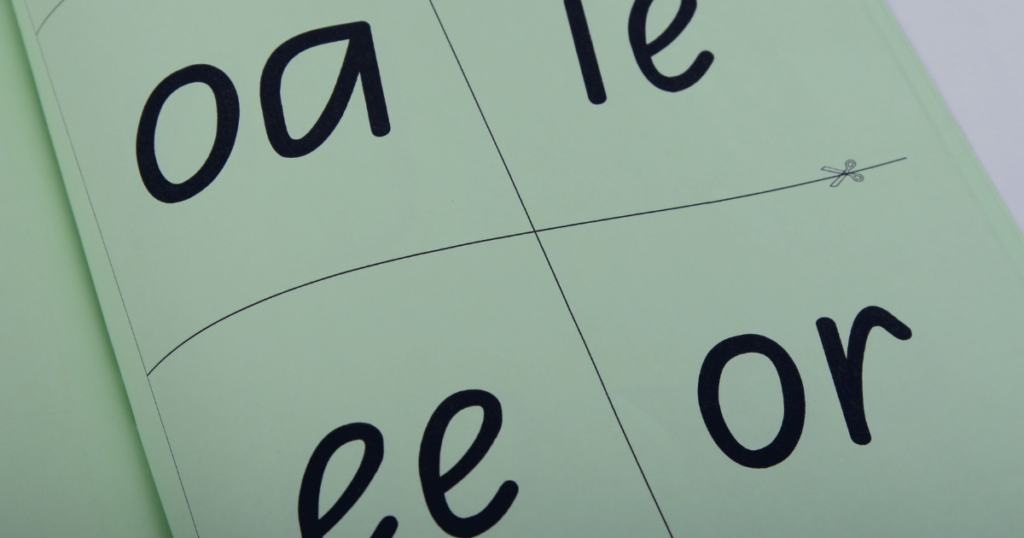
A classroom or tutoring session grounded in the Science of Reading will look different from what many parents experienced growing up. You’ll see:
- Explicit phonics instruction with a clear, logical sequence
- Students learning to decode words by sounding them out rather than guessing
- Frequent practice with decodable texts — books written specifically to match the phonics patterns students have already learned
- Direct instruction in vocabulary and comprehension strategies
- Regular review and repeated practice of previously learned skills
It’s structured. It’s sequential. And the research shows it works — especially for students who struggle.
How I Use the Science of Reading in My Teaching
As a certified Science of Reading educator, every tutoring session and Outschool class I teach is grounded in these research-based principles. Whether I’m working with a beginning reader on phonemic awareness or helping a 4th grader tackle multisyllabic words, the approach is always explicit, systematic, and tailored to where the student is right now.
If you have questions about whether your child’s reading instruction is aligned with the Science of Reading — or if you’re a teacher looking for resources to bring these principles into your classroom — I’m here to help.
Your child deserves reading instruction built on what the research actually says works. That’s what I’m here to provide.